Cannabinoid antagonist
カンナビノイド拮抗薬
Drugs that block cannabinoid receptors and oppose the effects of THC and related compounds; rimonabant, a CB1 receptor antagonist, is the best-known example.
Contents
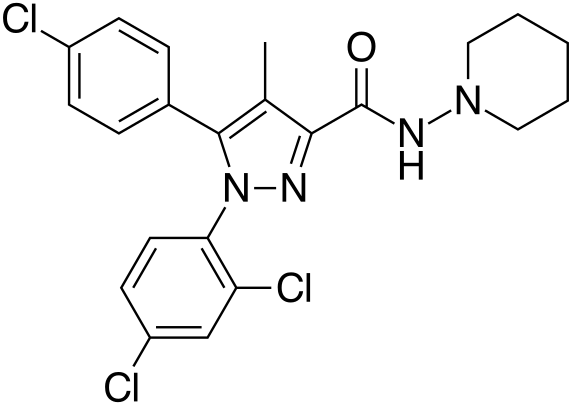
Source: Wikimedia Commons (Public domain)
How they act
Cannabinoid antagonists are drugs that block binding to cannabinoid receptors and oppose the effects of THC and related compounds, acting through competition at the receptor.
The case of rimonabant
Rimonabant, a CB1 receptor antagonist, was approved in Europe in 2006 as an anti-obesity drug, but was withdrawn from the market in 2008 after psychiatric side effects became a concern.
Research and antidote context
Antagonists are discussed in research on cannabinoid action, but no widely used clinical antidote exists. See the entries on cannabinoid receptors and the endocannabinoid system.
Position in Japan
Rimonabant has not been approved in Japan.